The way Andhra Pradesh manages land has changed forever. We have moved from dusty, manual registers to a high-tech digital ecosystem called WebLand AP. This system serves as the definitive “Record of Truth” for the state’s Department of Revenue. It provides a centralized home for digitally signed records that keep your property secure.
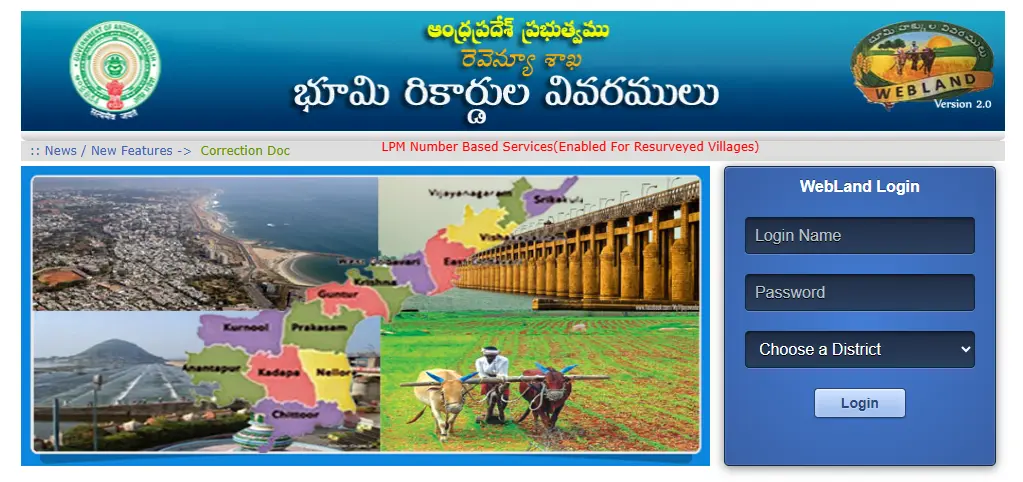
What exactly is WebLand AP?
WebLand AP is a sophisticated web application designed to manage land records in a digital format. It was launched in 2011 by the Chief Commissioner of Land Administration (CCLA). Think of it as the giant digital brain that stores information for approximately 2.70 crore survey numbers across the state.
WebLand vs. MeeBhoomi: The Internal Engine vs. The Public Window
Many people get these two names confused, but they serve very different purposes:
- WebLand AP: This is the “silent engine” used exclusively by government officials like Tahsildars and Village Revenue Officers (VROs). It is where they edit, update, and digitally sign your records.
- MeeBhoomi: This is the public portal. It is like an “ATM” or mobile app that allows you to view and download the data stored inside WebLand.
The Rule of Thumb: If your land record isn’t “locked” and signed in WebLand, it technically doesn’t exist for official purposes like bank loans or registrations.
Core Services for Every Landowner
WebLand provides several critical services that protect your “Aasti” (property).
1. Land Mutation and Title Transfers
Mutation is the process of updating the records when land is sold or inherited. When you apply at a MeeSeva centre, that request travels into the WebLand portal. The Tahsildar then verifies your documents and uses a digital signature to approve the change.
2. Aadhaar Seeding: Your Shield Against Fraud
By linking your Khata number to your Aadhaar, the system creates a unique digital identity for you. This is mandatory if you want to receive government benefits like Rythu Bharosa. More importantly, it prevents “Mosalu” (frauds) by making it nearly impossible for someone to impersonate a landowner.
3. The e-Pattadar Passbook (e-PPB)
The days of manual passbooks are gone. Your secure digital passbook is only generated once your data is “frozen” and verified within WebLand. These digital IDs are mandatory for farmers seeking seasonal crop loans.
Managing Your Records: Adangal, 1B, and Maps
To use the system effectively, you need to understand the documents it generates.
Adangal (Pahani)
The Adangal is a village-level record focusing on how land is actually being used. It tracks:
- Owner and Pattadar names.
- Soil type and water sources.
- Detailed crop information for each season.
ROR 1B: The Proof of Ownership
While the Adangal is about usage, the ROR 1B is about rights. It includes the history of landholders and is the primary indicator of a property’s legal status. If you are applying for a bank loan, this is the document the bank will want to see first.
How to Navigate the System
Restricted Login for Officials
The official login at webland.ap.gov.in is strictly for revenue employees. As a citizen, you cannot register an account here. Officials must:
- Enter their specific username and password.
- Select the relevant District, Mandal, and Village.
- Access modules like “Mutation Management” or “Land Distribution Reports”.
Correcting Digital Errors (POLR)
If you find a mistake—like a misspelled name or an incorrect area (Vistirnam)—the government uses a process called Purification of Land Records (POLR). You must file a grievance via the Spandana portal or at the Tahsildar office, after which a VRO will investigate and update the WebLand database.
Competitor Analysis: Andhra Pradesh vs. Telangana
While both states share a history, their digital paths have diverged. Telangana’s Dharani portal was highly centralized, but they are now moving toward a new system called Bhu Bharati to fix transparency issues. AP’s WebLand has remained a stable “silent engine” with a separate public window (MeeBhoomi), which many experts prefer for its multi-level verification.
System Comparison Table
| Feature | WebLand AP (Andhra Pradesh) | Bhu Bharati (Telangana – New) |
|---|---|---|
| User Access | Split (Official Backend / Public Frontend) | Integrated (Citizen & Official Modules) |
| Administrative Model | Decentralized (VRO/RI/Tahsildar) | Decentralized (Tahsildar/RDO) |
| Key Advantage | High transparency via MeeBhoomi | Reduced complexity (6 simple modules) |
| Security | Multi-factor Biometric & Aadhaar | Aadhaar-based authentication |
Strategic Integrations: Agriculture and Banking
WebLand AP does more than just store names; it powers the economy.
- e-Crop Booking: Officials use tablets to take photos of crops with GPS coordinates (latitude and longitude), which are uploaded directly to WebLand.
- Faster Insurance: Because crop data is verified in the system, insurance payouts for damage can be processed in weeks instead of months.
- Bank Loans: Banks can check 1B records instantly to ensure a piece of land isn’t already pledged for another loan, eliminating double-financing fraud.
The Future: WebLand 2.0 and Drones
The state is currently undergoing a massive resurvey called “Saswatha Bhoomi Hakku-Bhoomi Rakshana”.
- Drone Surveying: High-resolution drones fly over villages to create incredibly accurate maps (up to 10cm accuracy).
- Unique Land Parcel Numbers (LPM): Every inch of land is being assigned a unique number.
- WebLand 2.0: These digital maps will be fixed with GPS coordinates and stored in the database, potentially ending boundary disputes forever.
Conclusion
WebLand AP has turned land records into a secure, digital asset. While legacy errors still exist, the ongoing purification and resurveying efforts are moving AP toward a “frictionless” land market. For landowners, this means more security, easier loans, and total transparency.
Have you checked your digital records lately? Head over to the MeeBhoomi portal to ensure your ROR 1B and Adangal are up to date!.